Thinking with the Heart: The Practice of Sentipensar
The Mujerista Symposium explores sentipensar as a way of knowing that holds thinking and feeling together with theology, care, and community.
~3 min read

At Princeton Theological Seminary on April 20, 2026, the Mujerista Symposium carried forward the legacy of Dr. Ada María Isasi-Díaz by creating space for theological reflection rooted not only in ideas, but in lived experience, community, and care.
The symposium featured Rev. Dr. Yara González-Justiniano, whose lecture, “Sentipensar: Latin American Orientation to Care and Relations,” challenged participants to reconsider what counts as knowledge and how theology is practiced. Drawing from Fito Páez’s words, “Yo vengo a ofrecer mi corazón,” Dr. González-Justiniano described sentipensar— thinking with the heart— as a form of collective accountability to people, land, and community. Her lecture offered a powerful critique of detached and extractive ways of knowing:
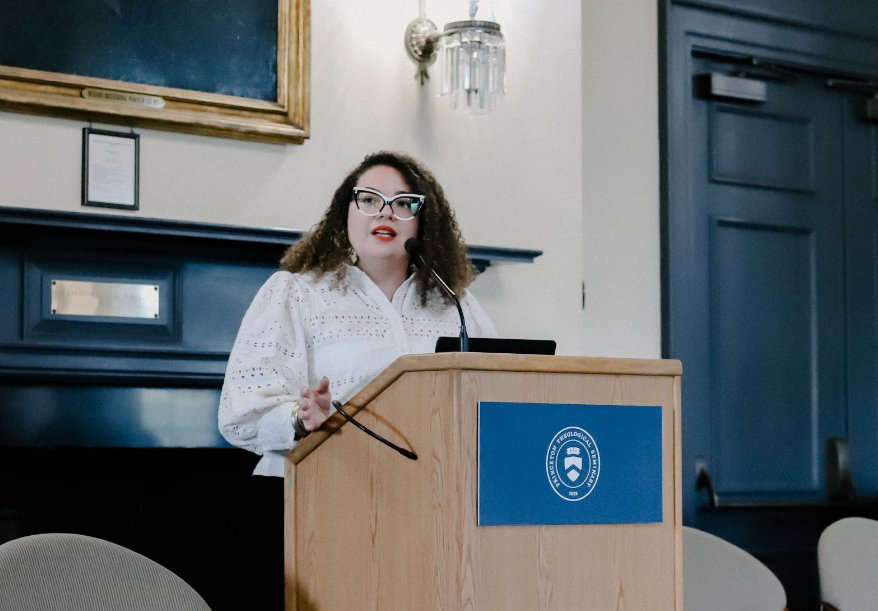
“Otherwise, it becomes the equivalent of eating Mexican food and deporting the cook.”
—Rev. Dr. Yara González-Justiniano

Respondent Rev. Dr. Kenia Vanessa Mendoza brought the conversation into pastoral and educational life, reflecting on the cost of being taught not to feel. Her response reframed sentipensar not as an abstract theory, but as an urgent practice for ministry, justice, and human connection.
A student panel extended the conversation further, exploring how these frameworks might take root within churches, seminaries, and communities without losing their relational grounding.What emerged throughout the gathering was more than a definition. It was a vision of theology as relational practice:
A theology that thinks and feels.
A theology that listens before it categorizes.
A theology that understands knowledge as something carried between bodies, histories, land, and community.
A theology that thinks and feels.
A theology that listens before it categorizes.
A theology that understands knowledge as something carried between bodies, histories, land, and community.

The Mujerista Symposium did not simply discuss sentipensar. It embodied it. And in doing so, it invited participants to reflect not only on what they know, but on who they are becoming in relation to others and the world around them.
Support Scholarship Rooted in Community
Every gift helps the next generation of Latine scholars cultivate knowledge grounded in relationship, care, and lived experience.
Give Today →